


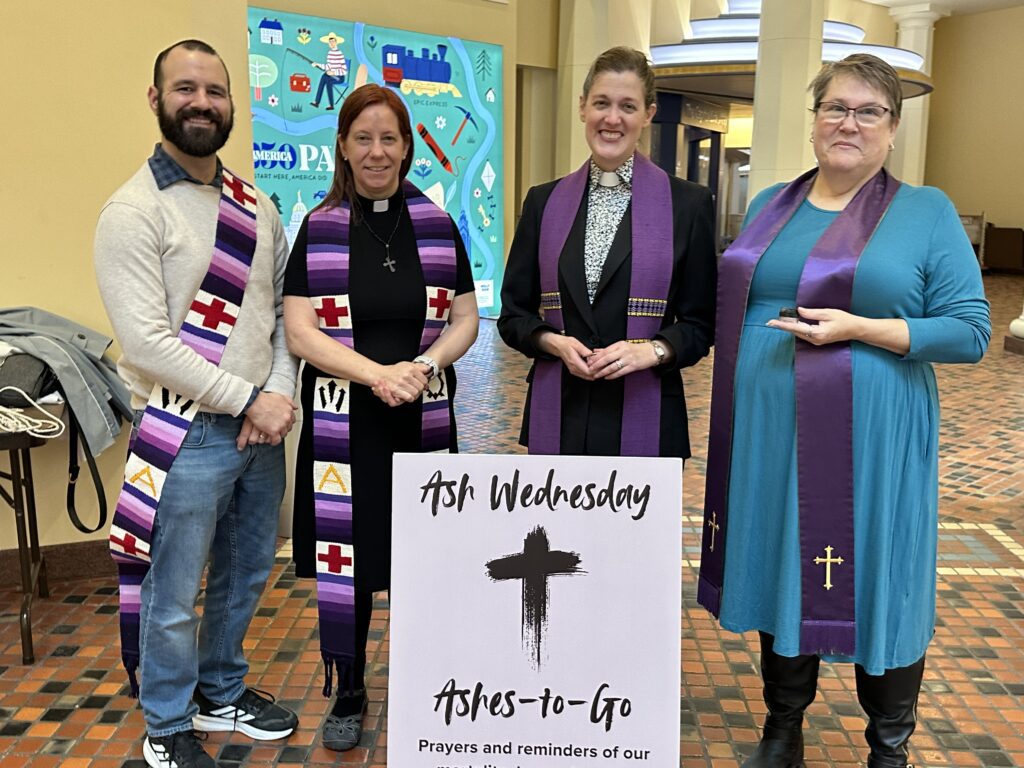
“Ashes-to-go at the Capitol is one of my favorite things of the year,” said the Rev. Matthew Best, pastor at Christ Lutheran in Harrisburg and a former LAMPa Policy Chair.
Beguan a decade ago to provide opportunity for individuals to receive prayers and the mark of ashes on their foreheads — a powerful symbol of repentance, reflection, and renewal — it was intended especially for those whose work in the state capital may not allow them time to get to their home congregations to attend traditional Ash Wednesday services. Initiated by LAMPa, it has since become an ecumenical offering for which many express profound gratitude.
The Rev. Sandy Strauss, former advocacy director for the Pennsylvania Council of Churches, has been participating for years. This year she said, one lawmaker who came to her to receive ashes “expressed his gratitude for our being there, even offering a hug in such an intimate moment. I’m always grateful for the opportunity to participate in what has become one of the most meaningful things I get to do each year.”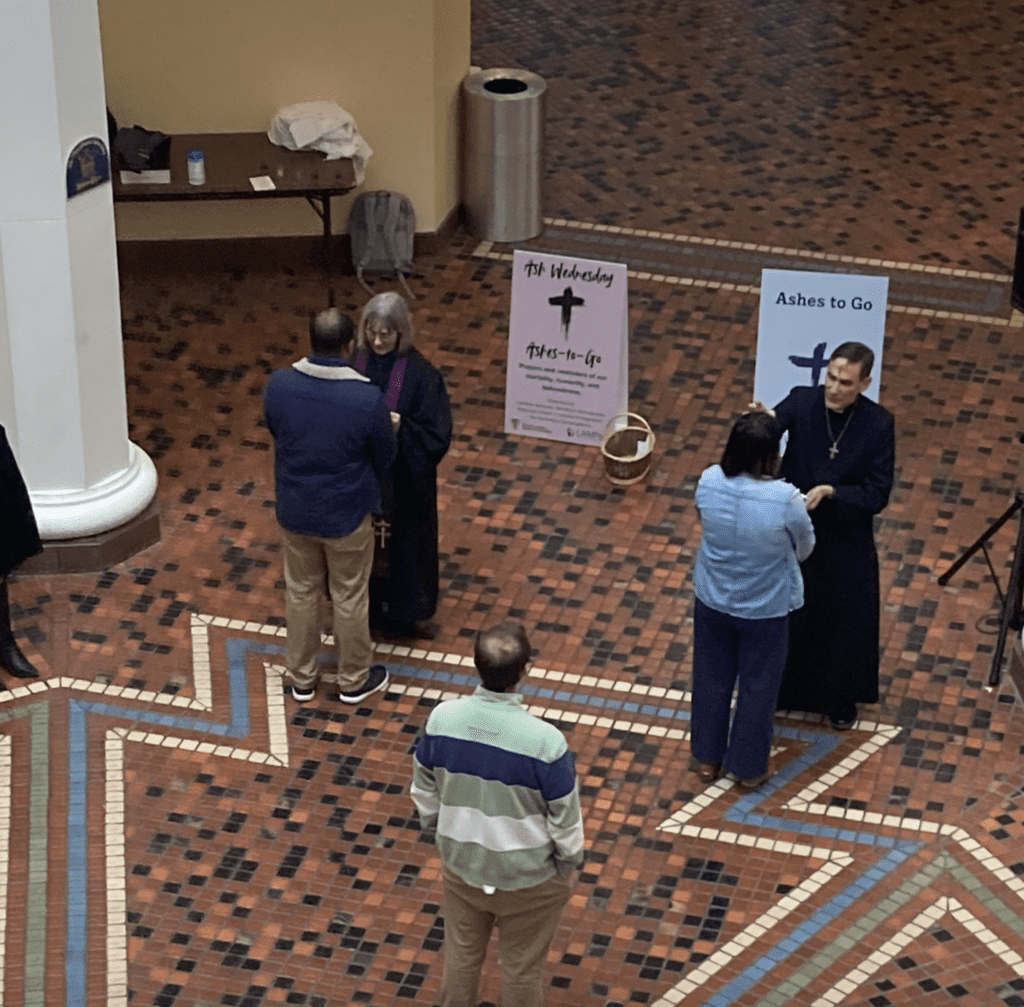
“I told someone that our presence does something powerful — not because of who we are, but because of who we are witnessing for,” Best said. “Each person that comes up has a fortress around them, protecting them in an environment that is often hostile to seeing the humanity of the people it is supposed to represent. Power and partisanship often cloud the vision of the people in the building. Prestige and importance are what is looked at and considered impressive and valuable. And then a person comes up to receive ashes. And for a few minutes, they let down their guard.
“Our presence creates an actual sanctuary in the midst of a place that runs on far different creeds than what Christ operates in and calls on followers to embody. I asked a women her name and what she wanted prayers for. She told me. And in the process, she told me that she received a diagnosis of cancer. I asked some more questions – was this a new diagnosis? Yes. And that’s when the tears started to flow for her. In that moment, she felt safe enough to be vulnerable and be real. And that alone is the start of healing.
“It’s as much a blessing for the clergy who do it as it is for those who receive the ashes and prayers,” Best said.
In the Christian tradition, Ash Wednesday marks the start of the holy season of Lent, a time for reflection and repentance in preparation for the celebration of Easter. For centuries, Christians have received a cross of ashes on the forehead at the beginning of that season as a reminder of mortal failings and an invitation to receive God’s forgiveness.
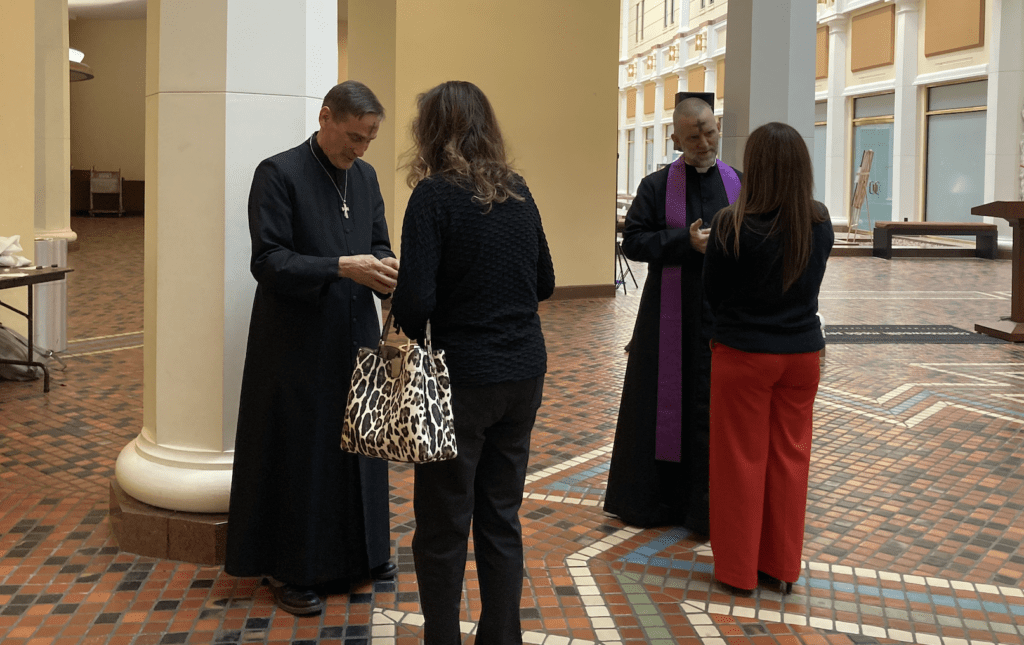 “The rite serves as a reminder of what unites humankind as well as an invitation to extend forgiveness and move beyond division,” said LAMPa Director Tracey DePasquale. “The ashes we receive are to remind us of what we most deeply share: our common humanity, our mortality, and our need for grace. They invite us to look at ourselves and our neighbors in a different way, and start a Lenten journey of reflection, reconciliation and acts of kindness.”
Lawmakers and staff often receive invitations from their constituents to stop by, if they wish, as the time to pause together is offered for all who seek it, whether they belong to a particular faith or simply wish to stop and reflect.